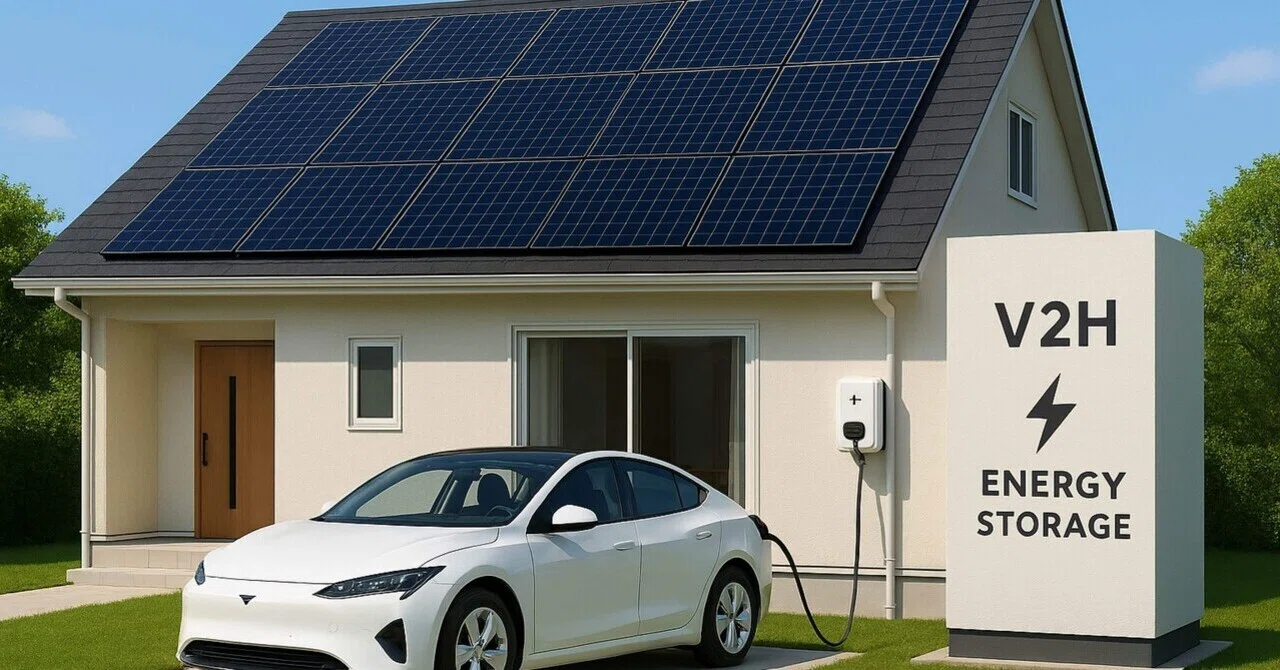
Episode 3‑2: How I Solved the Compatibility Problem Between V2H and the Tesla Powerwall
To use our EV as a “second home battery,” I began evaluating Nichicon’s latest V2H system, the VSG3 series.
The first major hurdle was its compatibility with the Tesla Powerwall.
Nichicon had not officially conducted connection tests with Tesla products, meaning the Powerwall was considered “unsupported.”
Even after researching connection methods using AI tools, nothing felt conclusive.
I started thinking,
“Maybe this isn’t going to work…”
Just then, one of the installation companies I had contacted reached out.
“Nichicon is planning to conduct connection tests with Tesla.”
This was incredibly fortunate timing.
—
Some Powerwall Models Don’t Work — But…
The test results revealed that certain Powerwall models do not operate correctly with the V2H system.
Nervously, I checked my unit.
Fortunately, my Powerwall model was classified as compatible.
At last, I could confidently give the green light.
I placed the order just before the end of the year and managed to submit the subsidy application before the January deadline.
—
Installation Day: The “Blackout Coordination” Test Passed Smoothly
Installation began early in the morning and finished around 4 p.m.
The test run also completed without major issues.
The part I was most concerned about was how the systems would behave during a power outage.
The results:
- Priority: Tesla → Nichicon V2H
- No interference between systems
- Charging the Powerwall from the V2H is not possible (as per design)
Everything worked exactly as expected.
—
Now the Real Demonstration Begins
With installation complete, I can finally begin testing:
- Can surplus solar power be used to charge the EV?
- Can the EV supplement power during rainy or low‑generation days?
- How smoothly can the Tesla Powerwall and V2H operate together?
In the next articles, I’ll share the results of the tests we conducted this month.
Thank you for reading.
コメント